
THE GOSPEL FROM ADAM TO CHRIST

A Doctrinal Series on Sin, Substitution, Atonement, Regeneration, and Life in Christ
ARTICLE 1 — THE STANDARD IS GOD
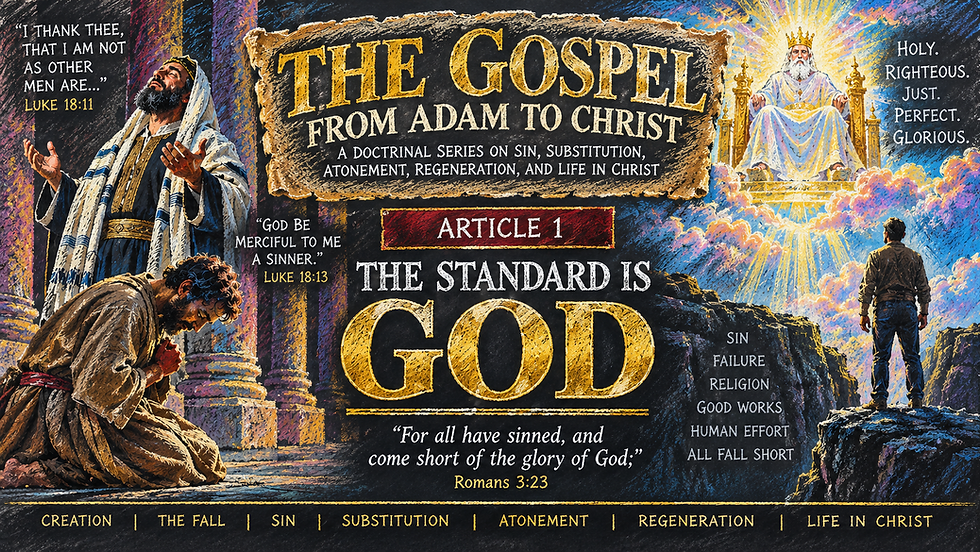
“For all have sinned, and come short of the glory of God;” — Romans 3:23
Before we can understand salvation, we must first understand the standard.
Most people judge themselves by comparing themselves with other people.
I am not as bad as that man.
I have never murdered anyone.
I try to treat people right.
I believe in God.
I go to church.
I am a decent person.
But there is a problem with every one of those statements.
They are using the wrong standard.
The question is not:
Are you better than somebody else?
The question is:
DO YOU MEASURE UP TO GOD?
And the Bible's answer is unmistakable.
No.
1. GOD IS PERFECT
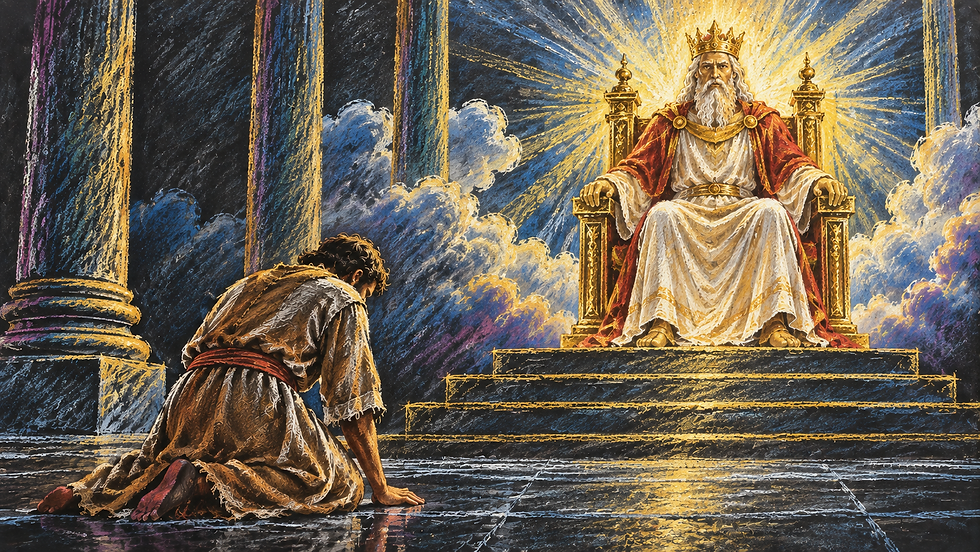
Everything begins with God.
God is not merely better than us.
He is not simply more righteous than us.
He is not the best Being in a universe filled with lesser beings.
He is altogether perfect.
Perfect in holiness.
Perfect in righteousness.
Perfect in justice.
Perfect in judgment.
Perfect in goodness.
Perfect in truth.
Perfect in wisdom.
Perfect in purity.
There is no imperfection in Him.
There is no unrighteousness in Him.
There is no darkness in Him.
The Bible says:
“God is light, and in him is no darkness at all.” — 1 John 1:5
Moses said:
“He is the Rock, his work is perfect: for all his ways are judgment: a God of truth and without iniquity, just and right is he.” — Deuteronomy 32:4
Notice the language.
His work is perfect.
All his ways are judgment.
Without iniquity.
Just and right.
God's standard is perfect because God Himself is perfect.
2. GOD CANNOT LOWER THE STANDARD
This is important.
People sometimes imagine God standing in heaven comparing everyone's good works with their bad works and deciding whether they have done enough to deserve heaven.
But that is not the biblical picture.
God cannot lower His standard because His standard proceeds from His own character.
For God to approve unrighteousness would be for Him to deny His own righteousness.
For God to ignore evil would be for Him to deny His own justice.
For God to call impurity clean would be for Him to deny His own holiness.
God does not merely have holiness.
God is holy.
God does not merely possess righteousness.
He is righteous.
God does not merely practice justice.
He is just.
Therefore His standard cannot be anything less than what He Himself is.
Jesus said:
“Be ye therefore perfect, even as your Father which is in heaven is perfect.” — Matthew 5:48
That is the standard.
Not respectable.
Not religious.
Not better than your neighbour.
PERFECT.
3. THIS IS WHERE MAN'S PROBLEM BEGINS
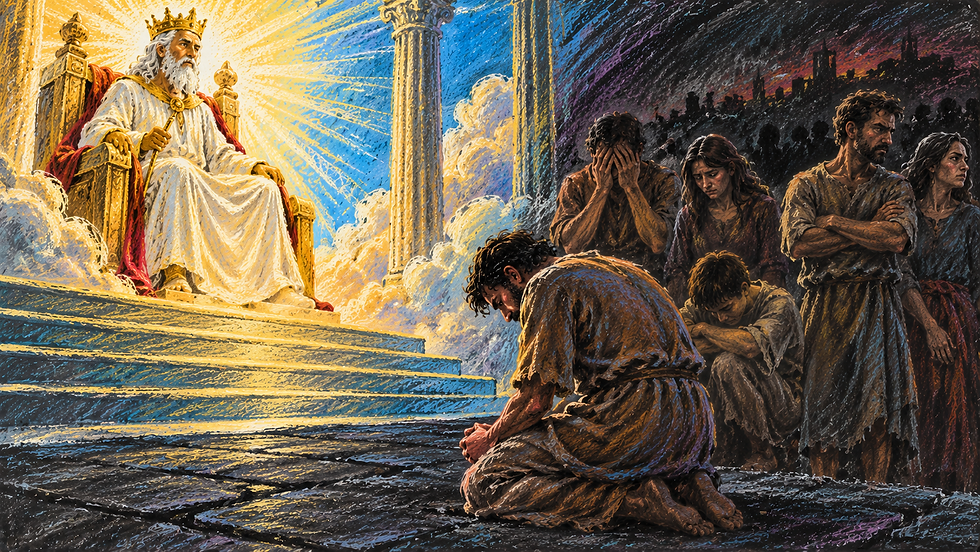
Now place man beside that standard.
Man is imperfect.
Man sins.
Man fails.
Man lies.
Man lusts.
Man envies.
Man becomes angry.
Man covets.
Man deceives.
Man disobeys.
Man falls short.
And Scripture says:
“For there is not a just man upon earth, that doeth good, and sinneth not.” — Ecclesiastes 7:20
Again:
“For all have sinned, and come short of the glory of God;” — Romans 3:23
That verse does not say:
All have sinned and come short of being decent.
It does not say:
All have sinned and come short of the preacher.
It does not say:
All have sinned and come short of the best person in town.
It says:
“COME SHORT OF THE GLORY OF GOD.”
That is the measurement.
God's glory.
God's holiness.
God's righteousness.
God's perfection.
And we all fall short.
4. THE GLORY OF GOD IS NOT A HUMAN STANDARD
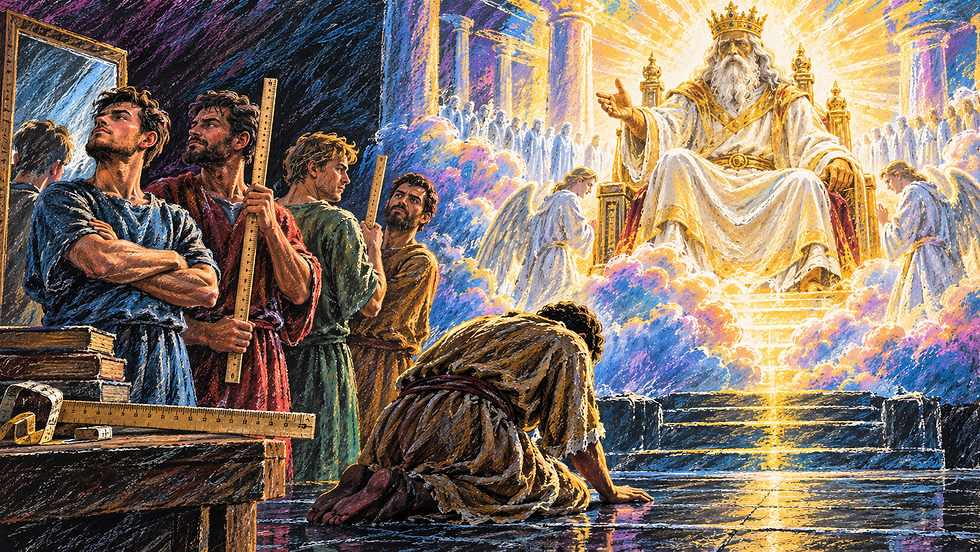
We need to understand how enormous Romans 3:23 really is.
We tend to think of sin horizontally.
One man looks at another and says:
At least I am better than him.
But salvation is not determined horizontally.
It is determined vertically.
The drunk may compare himself with the murderer.
The moral man may compare himself with the drunk.
The religious man may compare himself with all of them.
But none of those comparisons matter.
Suppose one man stands ten feet from a target.
Another stands one hundred feet away.
Another stands a mile away.
If the requirement is to stand exactly at the target, every one of them still falls short.
One may be closer.
But closer is not perfection.
One man may live a more moral life than another.
That does not make him sinless.
One man may be more religious.
That does not make him righteous as God is righteous.
One man may have a better reputation.
That does not make him perfect.
And God does not say:
“Come as close as you can.”
The standard is His glory.
5. IMPERFECTION CANNOT PRODUCE PERFECTION

This is why fallen man cannot save himself.
An imperfect man cannot manufacture perfect righteousness out of himself.
A sinner cannot undo the fact that he has sinned.
Imagine a man who commits a crime and then tells the judge:
"Yes, I broke the law yesterday, but today I helped an elderly lady across the road."
That good deed does not erase the crime.
Doing right today does not make yesterday's wrong cease to exist.
And yet that is how many people think about God.
I know I have sinned, but I do a lot of good.
I know I am not perfect, but nobody is.
Exactly.
And that is the problem.
Nobody is.
God is.
6. GOOD WORKS CANNOT REPAIR A BROKEN STANDARD
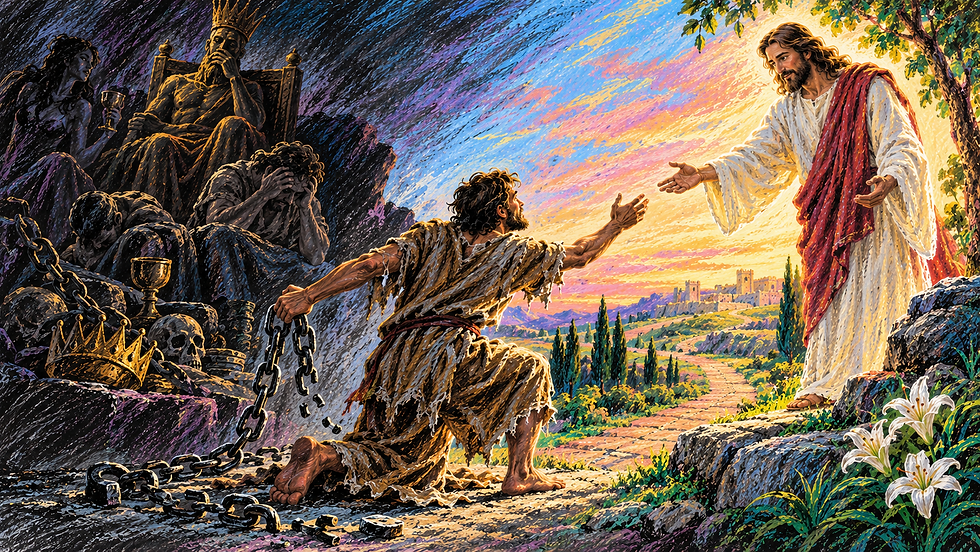
Good works are good.
We should do them.
But good works cannot produce justification before a perfect God.
Why?
Because righteousness is not simply having more good deeds than bad deeds.
God's standard is perfection.
Once the standard has been broken, human effort cannot make the record perfectly unbroken again.
You can improve your future behaviour.
But you cannot unsin your past.
You can become religious.
But religion cannot turn imperfection into perfection.
You can reform.
But reform is not regeneration.
You can become more disciplined.
But discipline cannot give you perfect righteousness.
Man can improve himself relative to other men.
He cannot make himself equal to God's holiness.
7. RELIGION DOES NOT SOLVE THE PROBLEM
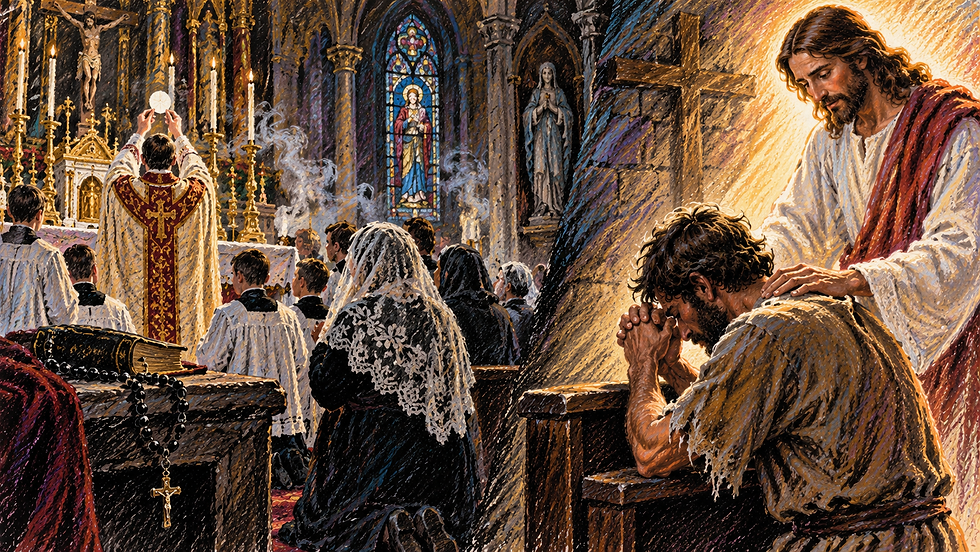
This is where religion becomes dangerous when people trust it instead of Christ.
Religion can teach a man to behave better.
Religion can teach discipline.
Religion can produce outward morality.
Religion can change habits.
But religion cannot change the standard.
And religion cannot make an imperfect sinner perfectly righteous.
Later in this series we will look at two extraordinary religious men.
Nicodemus.
And Paul.
Nicodemus was a Pharisee.
A ruler of the Jews.
A master of Israel.
A student of Scripture.
And Jesus told him:
“Ye must be born again.”
Paul could say concerning the righteousness which was in the law:
“Blameless.”
Yet Paul eventually said:
“And be found in him, not having mine own righteousness...” — Philippians 3:9
If religion could bridge the gap between man and God's perfection, those men should have made it.
They did not.
8. GOD'S GLORY REVEALS OUR CONDITION
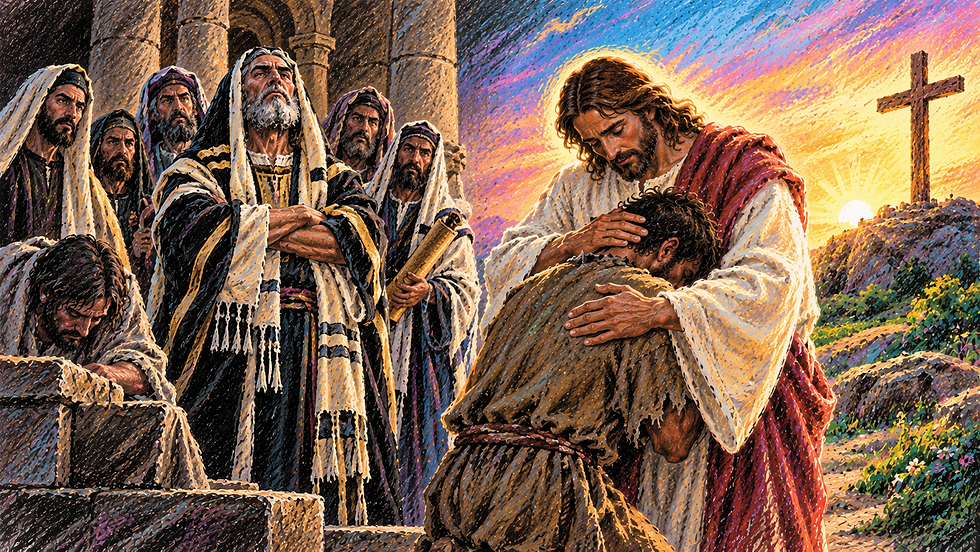
Romans 3:23 tells us two things at the same time.
It tells us something about man:
“All have sinned.”
And it tells us something about God:
“Come short of the glory of God.”
Man is sinful.
God is glorious.
Man is imperfect.
God is perfect.
Man is unrighteous.
God is righteous.
And that leaves us with an impossible gap.
You cannot climb high enough.
You cannot work hard enough.
You cannot become religious enough.
You cannot become moral enough.
You cannot undo your sin.
You cannot manufacture God's righteousness.
If salvation depends upon you attaining God's perfection—
YOU HAVE NO HOPE IN YOURSELF.
And that is exactly where the gospel begins.
9. THE GOSPEL DOES NOT BEGIN WITH MAN'S GOODNESS

The gospel does not begin by telling man how good he can become.
It begins by showing him how holy God is.
Until we understand God's perfection, we will never understand the seriousness of sin.
Until we understand God's righteousness, we will never understand why our righteousness is insufficient.
Until we understand God's justice, we will never understand why judgment must fall.
Until we understand God's glory, we will never understand what it means to fall short.
And until we understand that we cannot save ourselves, we will never understand why we need a Saviour.
10. GOD DOES NOT ASK US TO PRODUCE WHAT ONLY HE CAN PROVIDE
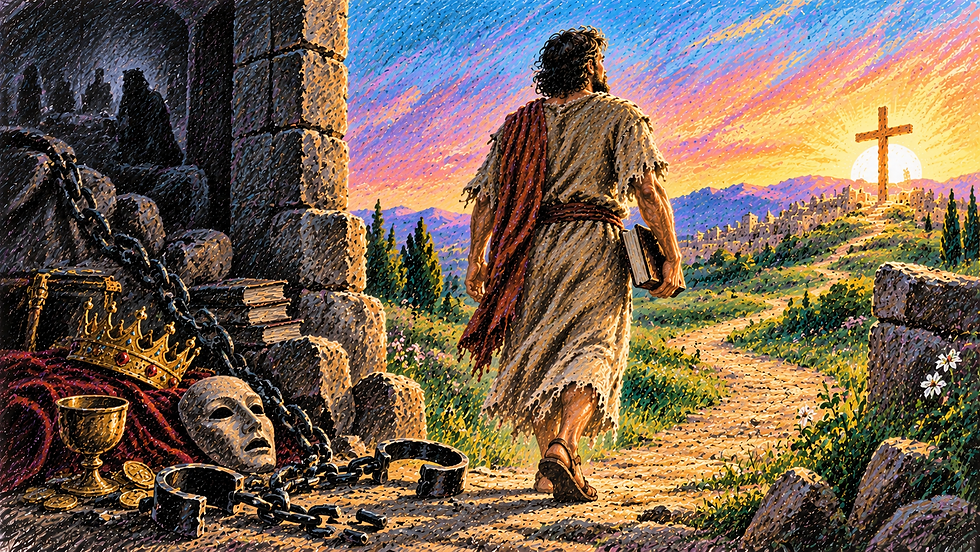
Here is where the doctrine becomes glorious.
God does not lower His standard.
Instead, He provides what fallen man could never produce.
Paul says:
“But now the righteousness of God without the law is manifested...” — Romans 3:21
Notice the expression:
“THE RIGHTEOUSNESS OF GOD.”
Not improved human righteousness.
Not religious righteousness.
Not man's best effort.
God's righteousness.
And then:
“Even the righteousness of God which is by faith of Jesus Christ unto all and upon all them that believe...” — Romans 3:22
There is the beginning of the answer.
Man cannot produce perfect righteousness.
God provides righteousness.
Man cannot climb up to God.
God comes down to man.
Man cannot attain God's perfection.
God provides what man lacks through Jesus Christ.
11. WHY THIS MATTERS

Before anyone can properly understand the cross, he must understand this.
The problem is not merely that we have made some bad decisions.
The problem is that we have sinned against a perfectly holy God.
The problem is not merely that we need improvement.
We need righteousness.
The problem is not merely that we have broken some rules.
We have fallen short of God's glory.
And that explains why salvation cannot be based upon human effort.
Human effort begins with an imperfect man.
And an imperfect source cannot produce the perfect righteousness demanded by a perfect God.
We need righteousness from somewhere else.
We need righteousness from God.
We need Christ.
12. THE PHARISEE USED THE WRONG STANDARD

Jesus gave an illustration that perfectly demonstrates the problem we have been discussing.
He spoke of two men who went to the temple to pray.
One was a Pharisee.
The other was a publican.
Jesus said:
“The Pharisee stood and prayed thus with himself, God, I thank thee, that I am not as other men are...” — Luke 18:11
There was his problem.
Listen carefully to the standard he used:
“I AM NOT AS OTHER MEN ARE.”
The Pharisee was looking horizontally.
He compared himself with other people.
He continued:
“Extortioners, unjust, adulterers, or even as this publican.” — Luke 18:11
Then he began listing his accomplishments:
“I fast twice in the week, I give tithes of all that I possess.” — Luke 18:12
Look at his confidence.
I am not like them.
I fast.
I tithe.
I am religious.
I live differently.
And perhaps everything he said about himself was outwardly true.
But he was measuring himself against the wrong standard.
His standard was other men.
And when you compare yourself with other sinners, you can almost always find someone who makes you look righteous.
The Pharisee looked at the publican and thought:
“I am better than him.”
But Romans says:
“For all have sinned, and come short of the glory of God;” — Romans 3:23
God never asked whether the Pharisee measured up to the publican.
The question was whether the Pharisee measured up to God.
And he did not.
13. THE PUBLICAN SAW SOMETHING THE PHARISEE COULD NOT SEE
Then Jesus turns our attention to the other man.
“And the publican, standing afar off, would not lift up so much as his eyes unto heaven...” — Luke 18:13
What a contrast.
The Pharisee stood confidently telling God about his righteousness.
The publican could hardly lift his eyes toward heaven.
The Pharisee was looking around.
The publican was looking up.
The Pharisee saw other sinners.
The publican saw a holy God.
And when a sinful man truly sees himself in the light of God's holiness, boasting disappears.
The Bible says the publican:
“Smote upon his breast, saying, God be merciful to me a sinner.” — Luke 18:13
He did not say:
God, look at my good works.
He did not say:
God, I am better than some people.
He did not say:
God, I have done more good than bad.
He did not offer God his religion.
He did not present his accomplishments.
He did not compare himself with anybody else.
He simply acknowledged what he was:
“A SINNER.”
And cried:
“GOD BE MERCIFUL TO ME.”
14. ONE MAN BROUGHT HIS RIGHTEOUSNESS — THE OTHER ASKED FOR MERCY
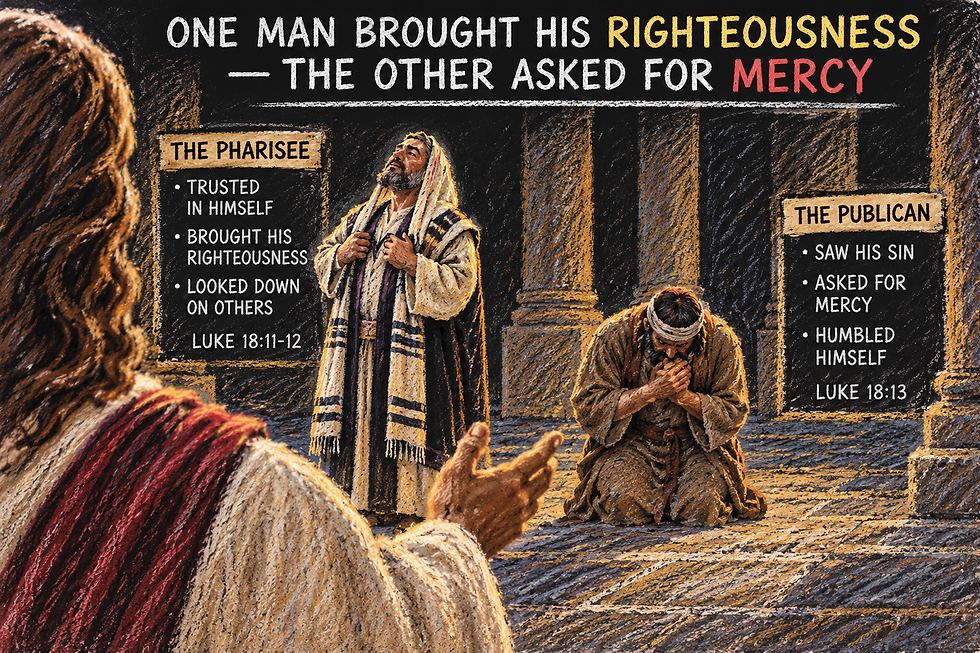
That is the dividing line.
The Pharisee brought his righteousness.
The publican asked for God's mercy.
The Pharisee said:
Look what I have done.
The publican said:
Look what I am.
The Pharisee compared himself with sinners.
The publican recognized that he stood before God.
The Pharisee thought he measured up.
The publican knew he fell short.
And then Jesus gives the verdict:
“I tell you, this man went down to his house justified rather than the other...” — Luke 18:14
Think about that.
The religious man walked into the temple convinced that he was righteous—
and walked out unjustified.
The sinful publican walked into the temple knowing that he had no righteousness to offer—
and went home:
JUSTIFIED.
Why?
Because before a man can receive the righteousness God provides, he must stop trusting the righteousness he thinks he possesses.
15. WHICH MAN ARE YOU?
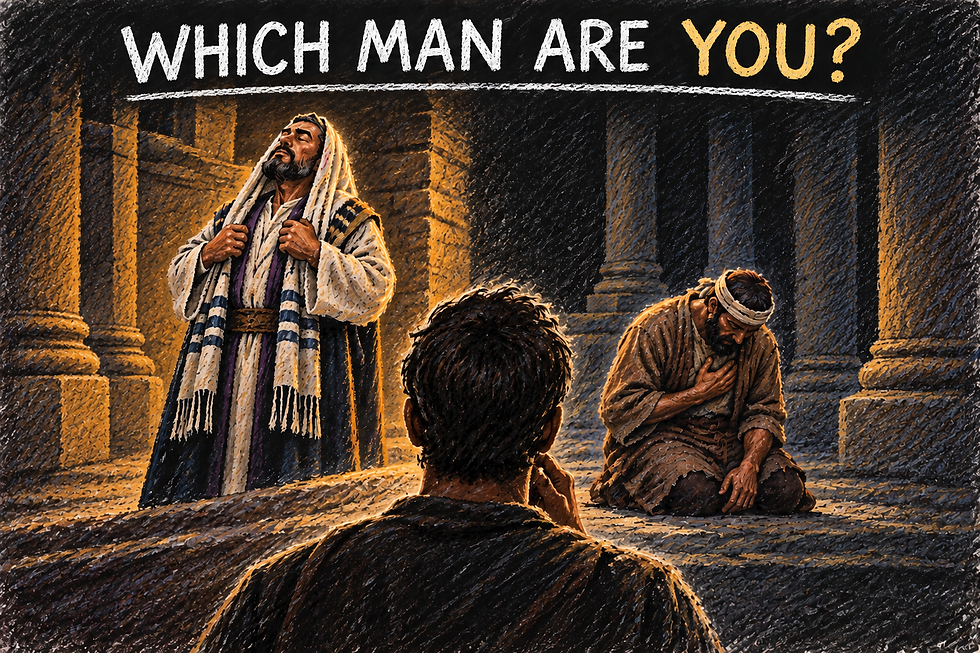
This brings Article 1 right down to each of us.
Which man are you?
Are you standing with the Pharisee saying:
I am not as bad as other people?
I have never done what they have done.
I go to church.
I give.
I pray.
I read my Bible.
I was baptized.
I live a good life.
Be careful.
You may be making the same mistake the Pharisee made.
You are looking at the wrong person.
Stop looking around.
Look up.
The standard is not the publican.
The standard is not your neighbour.
The standard is not the worst sinner you know.
The standard is:
GOD.
And when we stand before the perfect holiness, perfect righteousness, perfect justice, and perfect glory of Almighty God, there is only one conclusion:
“For all have sinned, and come short of the glory of God.”
The Pharisee fell short.
The publican fell short.
Paul fell short.
Nicodemus fell short.
You fall short.
I fall short.
All have sinned.
FINAL THOUGHT — STOP COMPARING AND START LOOKING UP
Perhaps you have always considered yourself a good person.
Compared with whom?
That is the question.
Compared with the murderer?
Perhaps.
Compared with the drunkard?
Perhaps.
Compared with the thief?
Perhaps.
Compared with the publican?
The Pharisee thought so too.
But compared with the perfect holiness of Almighty God?
WE ALL FALL SHORT.
And once we understand that, something happens.
Our boasting stops.
Our excuses stop.
Our comparisons stop.
Our confidence in our own righteousness begins to crumble.
And suddenly the prayer of the publican makes perfect sense:
“GOD BE MERCIFUL TO ME A SINNER.”
That is where the gospel begins.
Not with a man boasting about how good he is.
But with a sinner recognizing how holy God is.
Not:
“I thank thee, that I am not as other men are.”
But:
“God be merciful to me a sinner.”
One man compared himself with others.
The other saw his need before God.
One trusted his righteousness.
The other pleaded for mercy.
And Jesus said:
“This man went down to his house justified rather than the other.”
Before we can understand salvation, we must understand the standard.
And the standard is not man.
THE STANDARD IS GOD.
“For all have sinned, and come short of the glory of God;” — Romans 3:23
But that raises the question that takes us into Article 2:
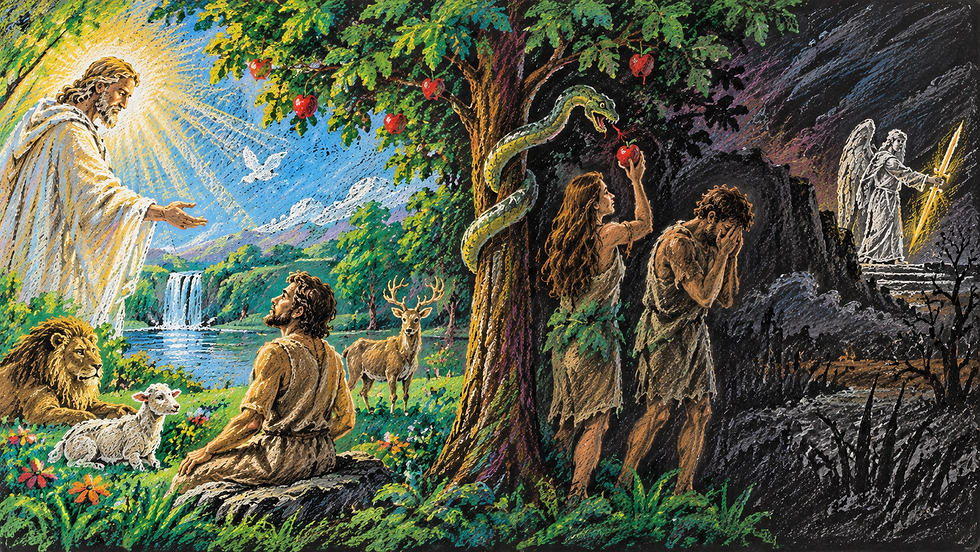
If God is perfect, and mankind is now sinful and falling short of His glory, was man always this way?
No.
God originally created man in His own image.
Adam enjoyed fellowship with God.
There was no sin separating them.
There was no death.
Then something happened that changed the course of the entire human race.
Adam fell.
Sin entered.
Death entered.
And after the Fall, Scripture tells us that Adam:
“Begat a son in his own likeness, after his image.” — Genesis 5:3
In the next article:
ARTICLE 2 — THE FALL: WHAT HAPPENED TO MAN?
We will discover why every one of us is born into a dying race—and why eventually Jesus Christ would say:


Comments